
How to Choose a Forex Broker: Regulation, Fees, Platforms, and Red Flags
 Fajar FebriansyahNo Comments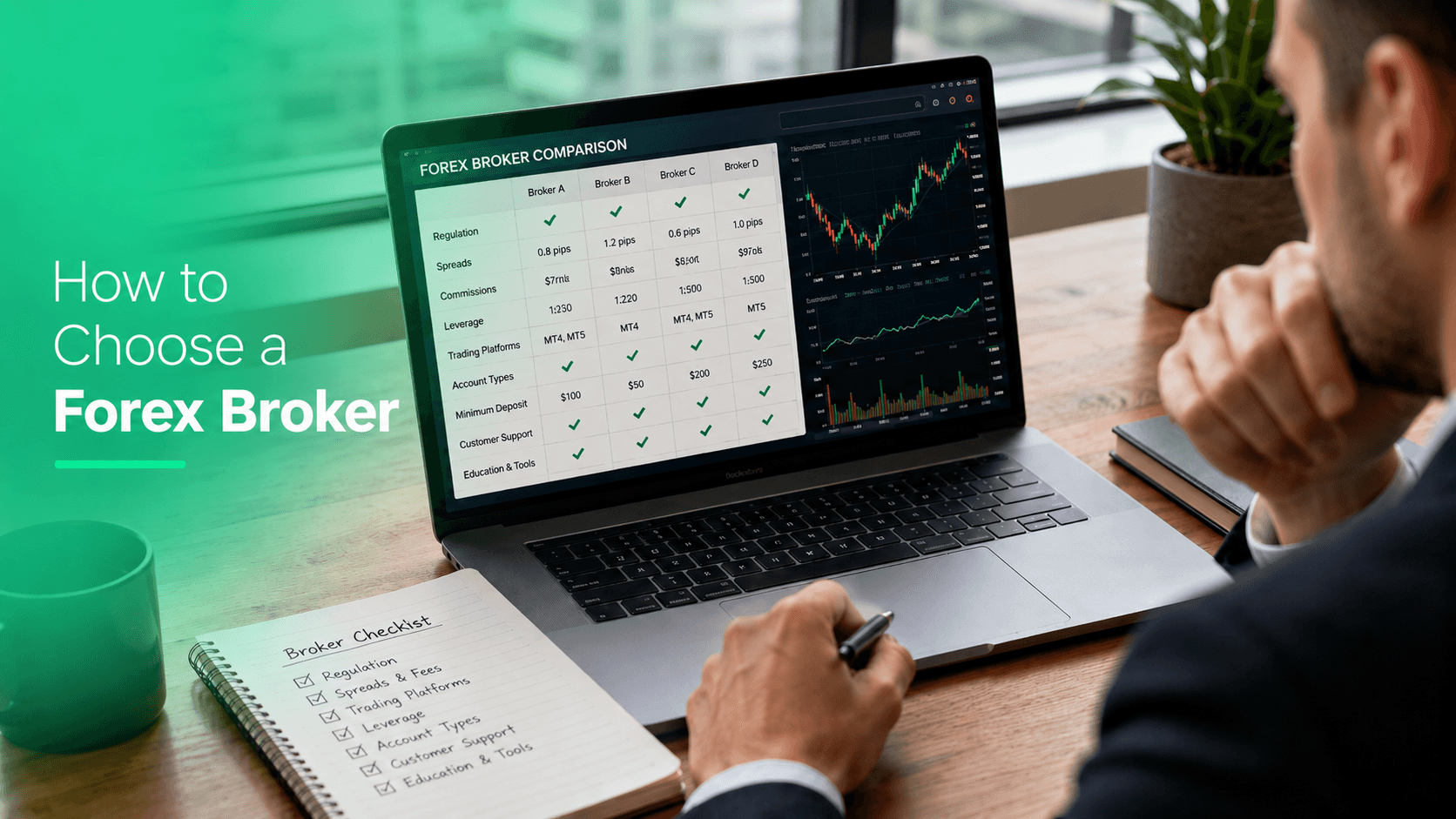
Choosing a forex broker is one of the first serious decisions a trader has to make.
A broker is not just a place to open trades. It controls how you deposit, how you withdraw, what fees you pay, what platform you use, how orders are executed, and how much protection you may have if something goes wrong.
That is why choosing a broker based only on a bonus, social media ad, or low spread claim can be risky.
A good forex broker should be transparent, properly regulated, clear about its fees, stable in execution, and fair with withdrawals. A bad broker can create problems even before your trading strategy gets tested.
This guide explains how to choose a forex broker by checking regulation, fees, platforms, account types, customer support, and warning signs.
Why Choosing the Right Forex Broker Matters
Forex trading already carries market risk. Prices can move quickly, leverage can increase losses, and strong setups can still fail.
A weak broker adds another layer of risk.
For example, a broker with unclear fees can make trading more expensive than expected. A broker with poor execution can cause slippage during active market hours. A broker with bad withdrawal practices can make it hard to access your own money.
The goal is not to find a perfect broker. Every broker has strengths and limits. The goal is to choose one that is suitable for your trading style, transparent about its conditions, and safe enough to trust with your funds.
Start With Regulation
Regulation should be the first thing you check.
A regulated broker is supervised by a financial authority in a specific jurisdiction. Regulation can cover areas such as client fund handling, reporting, risk disclosure, marketing standards, complaint handling, and business conduct.
This does not mean every regulated broker is perfect. It also does not remove trading risk. But a broker with real regulation is usually easier to verify than one that hides behind vague claims.
Be careful with phrases like “globally regulated,” “international broker,” or “registered company.” These phrases do not always mean the broker has permission to offer forex trading services in your region.
A company registration is not the same as a financial services license.
How to Check If a Forex Broker Is Regulated
Do not rely only on the license information shown on the broker’s website. A scam broker can copy a real license number, use a similar company name, or create a fake certificate.
Go directly to the regulator’s official website and search for the broker yourself.
Check the legal company name, license number, approved website domain, registered address, and license status. The website domain is especially important because clone brokers often copy the name of a real company but use a different website.
If the broker claims to be regulated in the U.S., check CFTC registration and NFA BASIC. If it claims UK authorization, check the FCA Financial Services Register or FCA Firm Checker. If it claims Australian authorization, check ASIC’s register.
If the details do not match, treat it as a warning sign.
Understand the Broker’s Fees
A broker may advertise low spreads, but spreads are only one part of trading cost.
Forex brokers can charge through spreads, commissions, swap fees, withdrawal fees, inactivity fees, currency conversion fees, and account maintenance fees. Some costs are easy to see. Others only become clear after you start trading.
A broker with tight spreads but high commission may not be cheaper than a broker with wider spreads and no commission. A broker with no commission may still earn through spread markups.
This is why traders should look at the total cost, not just the headline spread.
Spread, Commission, and Swap Fees
The spread is the difference between the buy and sell price. A lower spread can be useful for short-term traders because they enter and exit trades more often.
Commission is a separate trading fee charged on some account types, often on raw spread or ECN-style accounts. This type of account may offer lower spreads but adds a fixed commission per trade.
Swap fees are overnight financing charges. These matter if you hold trades overnight or for several days. Some currency pairs can have higher swap costs depending on the interest rate difference between the two currencies.
Before opening an account, check how the broker charges for your preferred pairs and trading style. A scalper, day trader, and swing trader may not have the same cost structure.
Check the Trading Platform
The trading platform is where you spend most of your time as a trader. It should be stable, easy to use, and suitable for your strategy.
Many forex brokers offer MetaTrader 4, MetaTrader 5, cTrader, TradingView integration, or their own web and mobile platforms. Each platform has a different feel.
MetaTrader is widely used and supports Expert Advisors. cTrader is often preferred by traders who like a modern interface and depth of market features. TradingView is popular for charting and market analysis. Broker-built platforms can be simple, but they should be tested carefully before trading live funds.
A good platform should make order placement clear. You should be able to see spreads, open positions, margin, account balance, and trading history without confusion.
If possible, test the broker through a demo account first. A demo account does not fully match live trading conditions, but it can help you understand the platform layout and basic execution.
Look at Order Execution
Order execution matters because the price you see is not always the exact price you get.
Slippage can happen when the market moves before your order is filled. This is common during news events, low liquidity periods, or fast market movement. Some slippage is normal in forex trading, but poor execution can make trading harder.
A serious broker should be clear about execution policy. It should explain order types, slippage risk, market execution, instant execution, requotes, and stop-loss handling.
For active traders, execution quality can be just as important as spreads. A low-cost account does not help much if orders are filled poorly during the moments that matter.
Review Account Types
Many brokers offer several account types. These may include standard accounts, raw spread accounts, commission-based accounts, Islamic accounts, professional accounts, or beginner-friendly accounts.
The right account depends on how you trade.
A beginner may prefer a simple standard account with clear costs and a smaller minimum deposit. A high-frequency trader may prefer a raw spread account with lower spreads and separate commission. A swing trader may care more about swap fees and overnight holding costs.
Do not choose an account type only because it sounds premium. Read the trading conditions. Minimum deposit, leverage, spreads, commissions, platform access, and available instruments can differ between accounts.
Check Available Markets
Forex brokers often offer more than currency pairs. Many provide CFDs on indices, commodities, metals, stocks, crypto, or ETFs.
The available markets matter if you want to trade beyond forex. But more instruments do not always mean a better broker.
Focus on the products you actually plan to trade. Check the spreads, trading hours, margin requirements, and contract details for those instruments.
For forex pairs, check major pairs, minor pairs, and exotic pairs. Major pairs are usually more liquid and often have lower spreads. Exotic pairs can have higher spreads and larger price swings.
Understand Leverage and Margin
Leverage allows traders to control a larger position with a smaller amount of capital. It can increase profit potential, but it can also increase losses.
Some brokers use very high leverage as a marketing tool. This can attract beginners who want fast returns. The danger is that high leverage can wipe out an account quickly if risk is not managed.
A responsible broker should make leverage risk clear. It should show margin requirements, stop-out levels, margin call rules, and how account equity is affected by open trades.
Before choosing a broker, make sure you understand the leverage offered and how it fits your risk tolerance.
Read the Deposit and Withdrawal Rules
A broker can look good until you try to withdraw.
Before depositing, read the broker’s deposit and withdrawal policy. Check the available payment methods, processing time, minimum withdrawal amount, possible fees, and verification requirements.
A reliable broker should make withdrawal rules easy to find. It should not surprise clients with unclear charges after they request their money.
Be careful if a broker accepts deposits easily but makes withdrawals complicated. Long delays, sudden fees, account upgrade requirements, or vague compliance excuses can be signs of a serious problem.
It is smart to test withdrawals with a smaller amount before keeping larger funds in the account.
Check Customer Support
Customer support matters more than many traders expect.
If there is a problem with verification, deposits, withdrawals, platform access, or trade history, you need support that responds clearly.
Before opening a live account, contact support and ask direct questions. Ask about regulation, withdrawal times, account fees, trading platforms, and available instruments. The quality of the answer can tell you a lot.
A reliable broker should answer specific questions without pushing you to deposit. If support avoids details, gives vague answers, or pressures you to open an account quickly, that is not a good sign.
Read Reviews the Right Way
Broker reviews can help, but they should not be the only factor.
Some reviews are paid. Some are written by angry traders who lost money through poor trading decisions. Some are posted by competitors. This means reviews need context.
Look for patterns. If many traders complain about the same issue, such as blocked withdrawals, hidden fees, aggressive account managers, or sudden account closures, take it seriously.
A few negative comments may not prove a broker is bad. Repeated complaints about the same core problem are different.
Use reviews to spot patterns, then verify those patterns through the broker’s terms, regulator records, and support responses.
Watch for Forex Broker Red Flags
This is the main checklist to use before choosing a forex broker:
- The broker cannot be verified on the regulator’s website
- The company name does not match the license record
- The broker promises guaranteed profit
- Withdrawals require extra fees after profit is shown
- The broker only accepts crypto or personal wallet transfers
- The website hides legal company details
- Customer support pressures you to deposit quickly
- Reviews mention repeated withdrawal problems
- The broker offers unrealistic bonuses with unclear terms
- The broker was recommended by an unknown account manager or social media trader
One red flag may not tell the full story. Several red flags together should make you stop and look for another broker.
Be Careful With Bonuses
Deposit bonuses can look attractive, but they often come with conditions.
Some bonuses require a large trading volume before funds can be withdrawn. Some can limit withdrawal access until certain requirements are met. In scam cases, bonuses may be used as an excuse to block withdrawals.
Before accepting any bonus, read the terms carefully. If the bonus rules are hard to understand, it may be safer to avoid the offer.
A broker should be chosen based on safety, cost, execution, platform quality, and withdrawal reliability. A bonus should never be the main reason.
Match the Broker to Your Trading Style
The best forex broker for one trader may not be the best broker for another.
A scalper may need tight spreads, fast execution, and low commission. A beginner may need a simple platform, clear education, and responsive support. A swing trader may focus on swap fees, stable execution, and charting tools.
Your broker choice should match how you trade.
Before opening an account, define what matters most to you. Think about your preferred pairs, trade frequency, platform, budget, and risk level. Then compare brokers based on those needs.
This is better than choosing the broker with the loudest marketing.
Final Thoughts
Choosing a forex broker is not about finding the broker with the biggest bonus or the lowest advertised spread. It is about finding a broker that is transparent, regulated, fair with costs, reliable with withdrawals, and suitable for your trading style.
Start with regulation. Check the broker directly through official regulator tools. Then review fees, platform quality, account types, execution, leverage, support, and withdrawal terms.
A good broker will make these details easy to check. A risky broker will make you rush, hide key information, or promise results that real trading cannot guarantee.
Take your time before depositing. In forex trading, protecting your capital starts before the first trade is placed.
FAQs About Choosing a Forex Broker
What should I check first when choosing a forex broker?
Start with regulation. Check the broker’s legal company name, license number, and website domain through the official regulator’s website.
Is a regulated forex broker always safe?
A regulated broker is not risk-free, and trading losses can still happen. But real regulation gives you more transparency and a clearer way to verify the broker compared to an unregulated company.
What fees should I check before opening a forex account?
Check spreads, commissions, swap fees, deposit fees, withdrawal fees, inactivity fees, and currency conversion fees. Look at the total cost, not only the advertised spread.
Which trading platform is best for forex?
It depends on your trading style. MetaTrader 4, MetaTrader 5, cTrader, TradingView, and broker-built platforms can all work, but you should test the platform before trading live funds.
How do I know if a forex broker is a scam?
A broker may be suspicious if it cannot be verified through official regulator records, promises guaranteed profit, hides company details, delays withdrawals, or pressures you to deposit quickly.
Should beginners use high leverage?
Beginners should be careful with high leverage. It can increase losses quickly. A lower leverage setting can help beginners focus on learning risk management first.

Related Posts
Market Maker vs ECN vs STP Brokers: What Traders Need to Know
Learn the difference between market maker vs ECN vs STP brokers, including how each model handles trades, fees, execution, and the key red flags traders should check before opening an account.
Comments
No Comments